
Planning an outdoor entertaining area, but confused about the terminology? You're not alone. Pergolas, verandahs,…
The Complete Guide to Coastal Pergolas in Broadbeach
G’day, Gold Coast neighbours! If you’ve been dreaming about extending your outdoor living space with a coastal pergola Broadbeach style, you’re not alone. Living here on the Gold Coast means enjoying our beautiful outdoor lifestyle year-round – when the weather cooperates, that is!
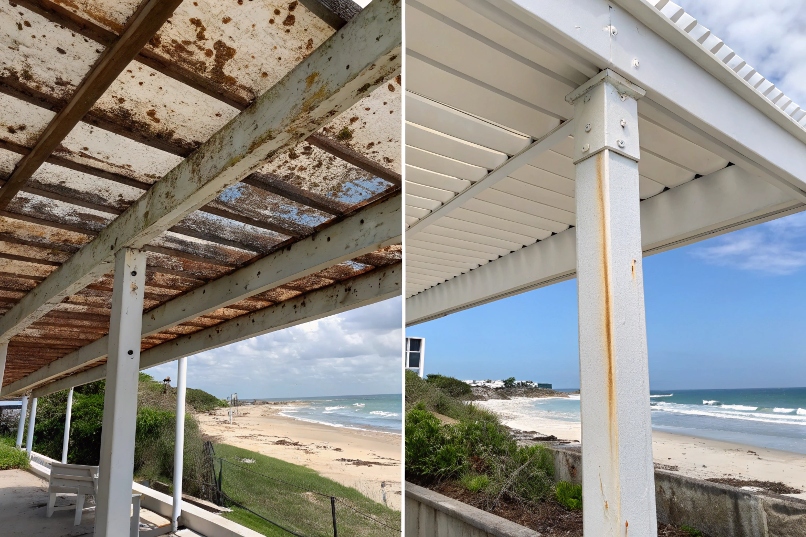
I was chatting with a client in Paradise Point last week who mentioned how their existing pergola just wasn’t cutting it anymore. “The salt air has absolutely destroyed the timber,” they told me. “And during that massive storm last month? Thought the whole thing was gonna end up in the neighbour’s yard!”
Our Broadbeach clients face specific challenges that homeowners just a few kilometres inland don’t have to worry about. The salt spray, intense UV exposure, sudden storms, and those crazy summer downpours all take their toll on outdoor structures.

Understanding Broadbeach’s Coastal Environment
Anyone who’s lived in Broadbeach for more than a season knows our weather can be as unpredictable as it is beautiful. One minute, you’re enjoying perfect sunshine, and the next, you’re scrambling to get the cushions inside before they’re soaked.
Local Weather Patterns
Broadbeach experiences what we locals call “four seasons in one day” – especially during our summer months from December to February. Our subtropical climate brings:
- Hot, humid summers with temperatures regularly hitting 30°C+
- Intense afternoon thunderstorms (often with little warning)
- Mild winters with daytime temps rarely dropping below 20°C
- Sea breezes that can suddenly pick up to 30-40km/h
Many new residents don’t realise how dramatically different the microclimate can be, even within Broadbeach itself. Properties within 200m of the shoreline experience significantly more salt spray and wind exposure than just a few blocks inland.
Environmental Challenges
The coastal pergola Broadbeach environment creates unique challenges you need to address:
- Salt corrosion: Salt spray can travel up to 1km inland and causes rapid deterioration of standard materials
- UV damage: We receive approximately 30% more UV radiation than Melbourne, causing rapid fading and material breakdown
- Humidity fluctuations: The combination of hot days and cool evenings creates condensation issues
- Sand abrasion: Even microscopic sand particles carried by wind act like sandpaper on finishes and materials
Essential Materials for Coastal Pergolas
When building a coastal pergola Broadbeach homeowners can rely on, material selection isn’t just important – it’s everything. The wrong choices will cost you thousands in repairs and replacement within just a few years.
Marine-Grade Materials Overview
For coastal applications, you need materials rated explicitly for marine environments:
- Marine-grade aluminium: Typically 6066-T6 alloy with enhanced corrosion resistance
- 316 stainless steel: Contains molybdenum for superior salt resistance (vs. standard 304 grade)
- Composite decking: PVC-wrapped or full composite materials that resist moisture absorption
- Modified hardwoods: Specially treated timber with enhanced durability in salt environments
- Powder-coated finishes: Multi-layer protective coatings with UV inhibitors
Sandra, who owns a holiday rental in Broadbeach, shared: “We replaced our timber pergola with aluminium three years ago. Not only does it look better, but we’ve saved almost $2,000 in maintenance costs already. Plus, our guests love that it doesn’t have splinters!”
Cost-Benefit Analysis
Let’s be upfront about costs. A properly constructed coastal pergola Broadbeach style will typically cost 30-40% more than standard inland versions. However, the long-term math makes the investment obvious:
| Material Type | Initial Cost (6x4m pergola) | 10-Year Maintenance Cost | Expected Lifespan | Cost Per Year |
| Standard Timber | $12,000-$15,000 | $8,000-$10,000 | 8-10 years | $2,000-$2,500 |
| Standard Aluminium | $15,000-$18,000 | $3,000-$4,000 | 12-15 years | $1,200-$1,500 |
| Marine-Grade Aluminum | $18,000-$22,000 | $1,500-$2,500 | 25-30+ years | $650-$980 |
UV Protection Standards for Beachfront Properties
When designing a coastal pergola Broadbeach, homeowners can enjoy year-round; UV protection isn’t just about comfort—it’s about preserving your investment in the structure and everything beneath it.
For coastal pergola Broadbeach installations, industry standards recommend:
- Minimum UPF (Ultraviolet Protection Factor) rating of 50+ for fabric coverings
- UV stabilised materials with 10+ year manufacturer warranties
- Polycarbonate sheets with a minimum 99.9% UV blocking capability
- Powder coatings with UV inhibitors specifically formulated for marine environments
Proper UV protection delivers significant benefits beyond just comfort:
- Extends furniture lifespan by 300-400%
- Reduces cooling costs for adjacent indoor spaces by up to 30%
- Prevents fading of deck surfaces and outdoor kitchen finishes
- Allows comfortable use of outdoor spaces even during midday summer heat
Wind Ratings and Storm Protection
Living in Broadbeach means accepting that severe weather is part of life. Your coastal pergola Broadbeach installation needs to withstand everything from daily sea breezes to the occasional cyclonic event.
Broadbeach falls within Wind Region B according to Australian Standards, with properties within 200m of the shoreline classified in the highest exposure category. This translates to specific engineering requirements.
For a truly storm-resistant coastal pergola Broadbeach residents can trust, these design elements are essential:
- Enhanced footings: Typically 600mm+ deep with proper concrete anchoring
- Reinforced corner bracing: Additional diagonal supports at all corners
- Wind-rated fastening systems: Specialised cyclonic screws and bolts
- Interlocking frame components: Reduces movement during high winds
- Engineered roof tie-downs: Prevents uplift during sudden pressure changes
James from Broadbeach Waters learned this lesson the hard way: “We went with a cheaper quote that didn’t include the enhanced wind bracing. During the first major storm, half the roof lifted up. The repair costs were more than what we would have paid to do it properly from the start.”
Maintenance Tips for Coastal Pergolas
The harsh Broadbeach environment demands specific maintenance practices to ensure your coastal pergola remains beautiful and functional for decades.
For coastal pergola Broadbeach installations, follow this maintenance timeline:
Monthly (Year-Round):
- Hose down all surfaces to remove salt deposits
- Check and clear all drainage points
- Inspect for any signs of corrosion or damage
Quarterly:
- Wash all surfaces with mild soap and freshwater
- Apply marine-grade protectant to any moving parts
- Check all fasteners for tightness
Annually:
- Conduct a full structural inspection
- Refresh protective coatings as needed
- Treat any minor corrosion spots immediately
While regular DIY maintenance is crucial, professional inspections provide added assurance. Schedule professional inspections annually for beachfront properties and every 2 years for properties 200m-1km from the shore.
Case Studies: Successful Coastal Installations
Nothing demonstrates the value of proper coastal pergola Broadbeach construction like real-world examples from your local area.
Jennifer T. – Beachfront Apartment Owner: “After two failed pergolas in five years, we finally invested in a proper coastal-rated structure. Three years later, it still looks brand new despite being right on the beachfront. The team’s understanding of Broadbeach’s specific challenges made all the difference.”
Sarah L. – Investment Property Owner: “My holiday rental’s occupancy increased by almost 20% after installing a proper coastal pergola. Broadbeach visitors specifically mention the outdoor living space in their reviews. The additional rental income meant the pergola paid for itself within 14 months.”
Conclusion
Throughout this guide, we’ve explored why creating a durable coastal pergola Broadbeach installation requires specialised knowledge and materials. From understanding our unique local climate challenges to selecting appropriate marine-grade components, every decision impacts both the initial investment and long-term satisfaction.
The data is clear: while marine-grade materials increase upfront costs by 30-40%, they dramatically reduce lifetime expenses while extending usability by decades rather than years. For Broadbeach properties, particularly those within 1km of the shoreline, these considerations aren’t optional—they’re essential.
Remember, in our beautiful but harsh coastal environment, cutting corners initially only leads to greater expenses later. Invest wisely in your outdoor living space, and enjoy the Gold Coast lifestyle as it was meant to be experienced—outdoors, year-round, worry-free.

